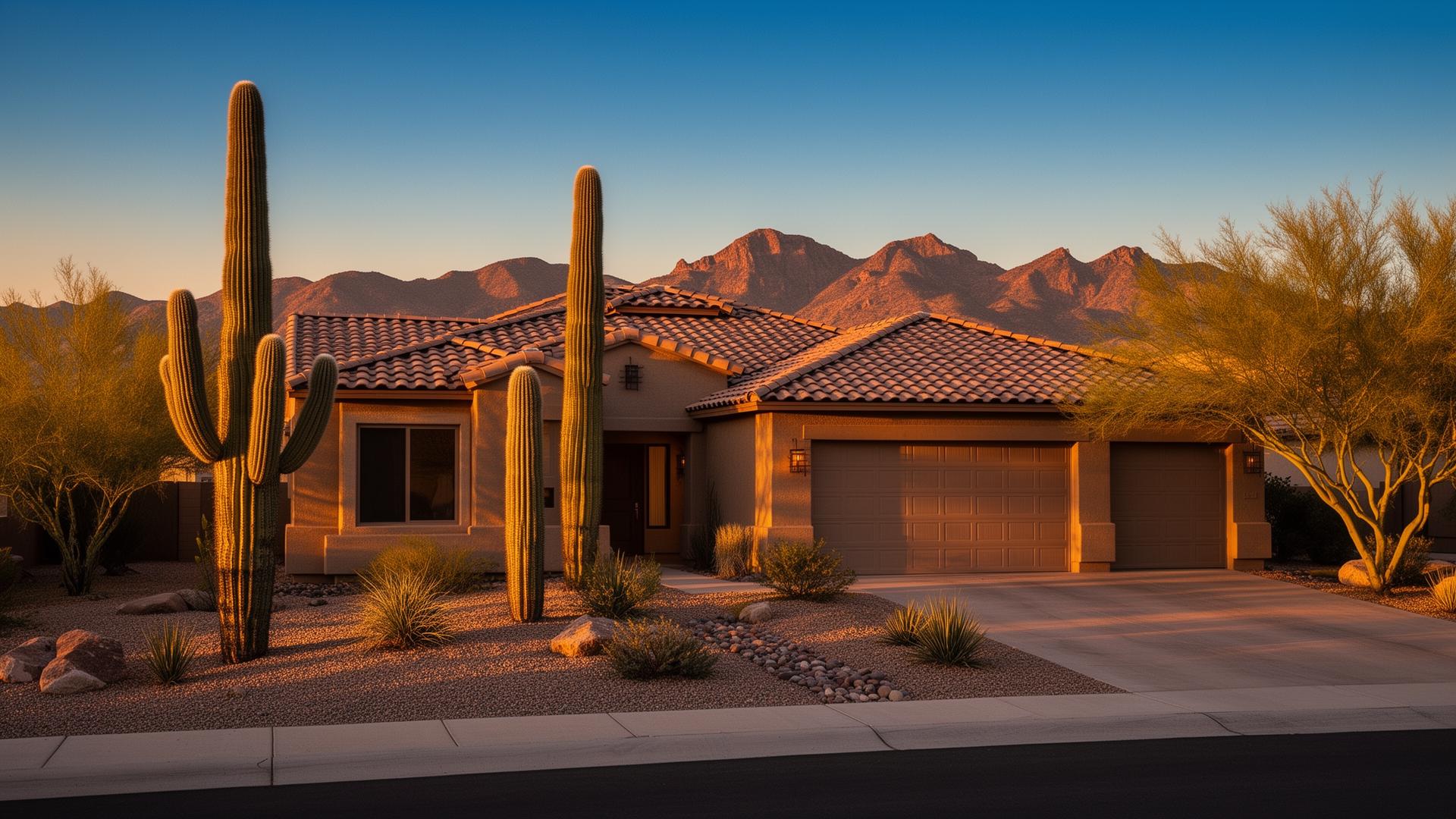
New Construction Homes in San Tan Valley and Queen Creek AZ (2026 Complete Guide)
Thinking about buying a new build in Queen Creek or San Tan Valley? Here’s what actually matters, what surprises most buyers, and how to not overpay.
Key Takeaways
- 1The list price is only part of the total cost
- 2Spec homes are often simpler for relocating buyers
- 3Queen Creek and San Tan Valley serve different priorities
- 4Small decisions during the process can significantly impact final cost
Quick Answer
Queen Creek and San Tan Valley are the East Valley's two strongest new-construction markets — but they're not the same buy. Queen Creek new builds typically run $480k–$650k+ with stronger long-term resale. San Tan Valley runs $370k–$500k with more aggressive incentives right now. Buy in Queen Creek for hold value, in San Tan Valley for value per square foot. Either way: bring your own agent to the model home. It's the single biggest mistake new-build buyers make.
Thinking about buying a new build in Queen Creek or San Tan Valley?
Why New Construction Is The Default Here
These two areas were farmland a decade ago. That's why they have the inventory: builders bought up huge tracts and are still building. If you want a brand-new home in the East Valley, this is where you'll find the most options — and the most negotiation leverage.
Queen Creek vs San Tan Valley New Builds
| Factor | Queen Creek | San Tan Valley |
|---|---|---|
| Typical new-build range | $480k–$650k+ | $370k–$500k |
| Common builders | Toll Brothers, Tri Pointe, Ashton Woods, Pulte | Meritage, LGI, KB, Lennar, Richmond American |
| Lot sizes | Often larger; more semi-custom | Standard suburban |
| Incentives right now | Moderate — buydowns, some closing credits | Aggressive — buydowns + closing + included upgrades |
| 5-year resale outlook | Stronger (name recognition, schools) | Slower (next phase competes with you) |
| Best for | Long-term family hold | Value buyers, first-time, investors |
The Builder Incentive Math (Read This)
Builders almost never cut sticker price — it would damage values for everyone who already bought. Instead, they offer incentives worth $20k–$50k+:
- 2-1 rate buydown (your rate is 2% lower year 1, 1% lower year 2). On a $500k loan, that's roughly $500–$700/mo savings the first two years.
- Closing-cost credits ($10k–$20k) — direct money toward your closing.
- Included upgrades — flooring, blinds, appliance packages.
The catch: incentives are usually tied to using the builder's preferred lender. That lender's rate may be slightly higher than market. Always have an outside lender quote in hand to compare the total cost, not just the headline incentive.
The Design Center Trap
Builders make real margin at the design center. Upgrades there are marked up 2–3x retail:
- Do at the design center: structural changes, electrical, plumbing rough-ins, anything behind drywall.
- Do AFTER closing: flooring (replace builder-grade later), backsplash, light fixtures, paint, landscaping. You'll pay 40–60% less.
A buyer who spends $40k at the design center on cosmetic upgrades has typically overpaid by $15k–$20k versus doing it post-close.
Phase 1 vs Final Phase Tradeoff
Phase 1 of a new community: lower base prices, best lot selection, but you live in active construction for 18–36 months and amenities aren't built yet.
Final phase: higher base prices, fewer lot choices, but the community is finished — pool, parks, neighbors, and resale comps all exist.
If you have kids and want amenities now, buy late phase. If you're optimizing for price and lot, buy early and accept the construction noise.
What Buyers Get Wrong
- Walking in without an agent. The on-site rep works for the builder. Builder pays your agent's commission either way — you get representation for free, and you negotiate better.
- Skipping the third-party inspection. New ≠ flawless. Inspections routinely find $3k–$8k of warranty-eligible issues you'd otherwise miss.
- Overpaying for the lot premium. A $30k "preferred lot" rarely returns $30k at resale. Pay for view or privacy you'll enjoy, not for resale math.
- Believing the timeline. Quoted 6 months almost always means 7–9. Don't sell your current home assuming the build will close on time.
- Buying San Tan Valley assuming Queen Creek resale. Different appreciation curves. STV is the better entry, QC is the better hold.
Best Fit vs Not Ideal
New construction here works well if you: can wait 4–9 months, want a lower payment via builder rate buydowns, are okay with HOA rules, and value zero deferred maintenance.
Reconsider if you: need to move in 30 days, want mature trees and an established neighborhood, or want to be in Gilbert/Chandler proper (limited new-build inventory there).
How To Decide
- Get pre-approved at market rate with an outside lender first.
- Pick 2 communities — one in Queen Creek, one in San Tan Valley — at the same price point.
- Bring your agent to the first model-home visit. Critical.
- Compare current incentive packages in writing.
- Walk both neighborhoods at 7am and 7pm to feel daily life.
- Decide on phase strategy — early for price, late for amenities.
This is exactly the kind of decision worth working through with someone local before you sign a builder contract — those contracts heavily favor the builder by default. Browse current inventory in our new build communities, or compare areas: Queen Creek vs San Tan Valley.
Final Thoughts
New construction in Queen Creek and San Tan Valley is one of the strongest value plays in the Phoenix metro right now — but only if you negotiate well, avoid the design-center trap, and pick the area that matches your hold horizon. Get those three right and the home takes care of itself.
Common Questions